Sen. McCormick Reflects on His First Year in Office
December 5, 2025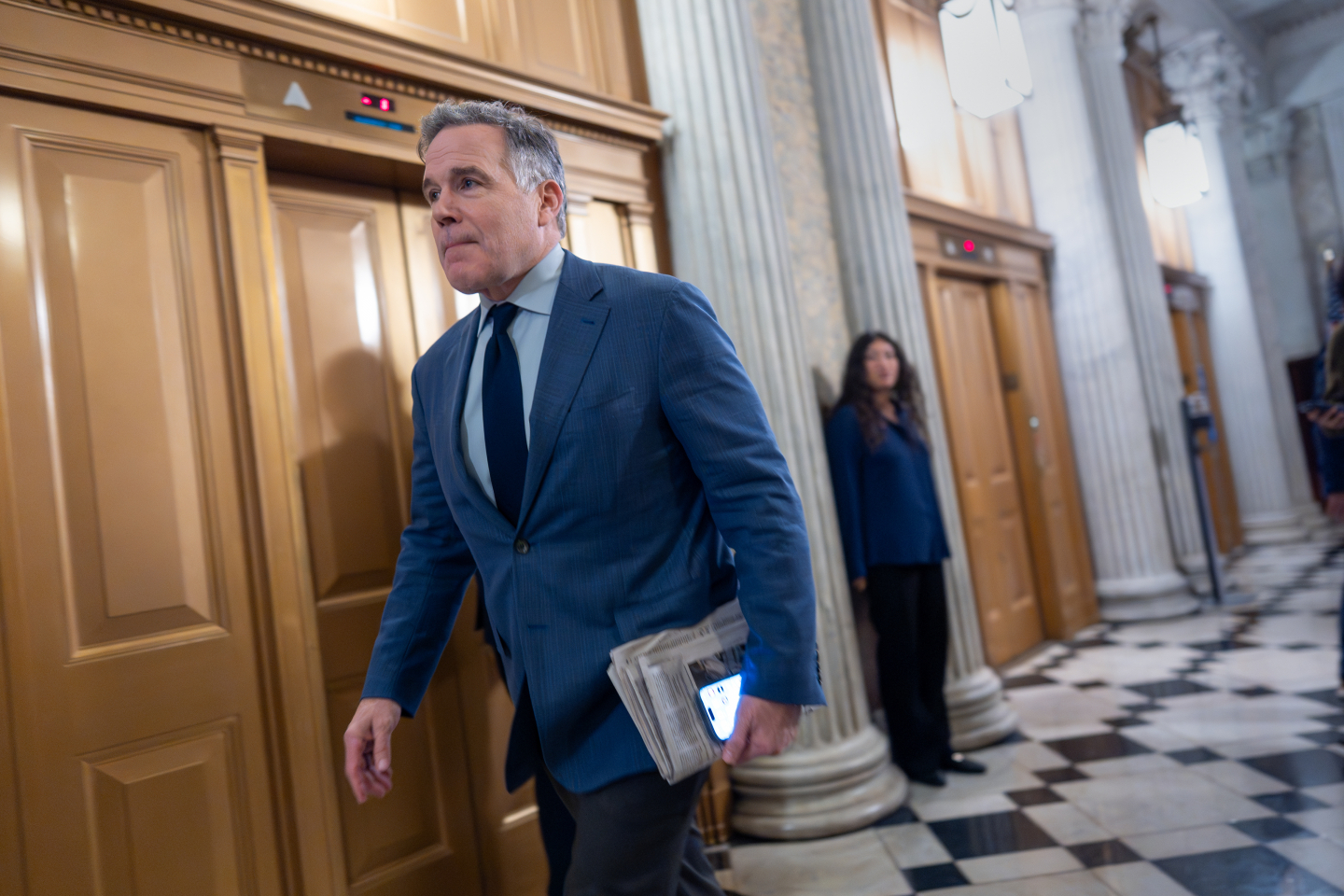
McCormick Reflects on His First Year in Office
In an interview with RealClearPennsylvania, U.S. Sen. Dave McCormick listed his accomplishments in his first year in office, including the “Big 5”: the Nippon-U.S. Steel deal, the $20 billion Amazon data centers investment, the Energy Summit bringing $92 billion in investments to the commonwealth, and the $5 billion deal bringing Korean firm Hanwha to the Philadelphia Shipyard.
The ships built per year will go from 1.5 vessels to 20, creating 5,000 new jobs. And Westinghouse announced at this summer’s Pittsburgh Energy Summit that it will build 10 nuclear power plants in Pennsylvania. The company then accounced an $80 billion investment in partnership with the U.S. government in October.
“Any one of those five things in one year would be unprecedented, but to have all five things happen in one year is a really special thing,” said McCormick. “So, I think that’s evidence of the direction we’re headed and the kind of opportunity. We’ve just got to seize the moment and make the most of it.”
McCormick added: “I think I’ve redefined the role of a senator in some ways, and the way I did that was the Energy Summit in Pittsburgh. I don’t think there’s ever been anything like that. Not only just in Pennsylvania, but in the country.”
President Trump, members of his cabinet, Gov. Josh Shapiro, and Sen. John Fetterman, both Democrats, attended, along with CEOs from the energy, technology, and investment sectors. That announced $92 billion in investments will create “thousands of jobs,” said McCormick.
“I’d be hard-pressed to find anything in modern history that was an analog to that, and I know it sounds braggy, but I actually believe it’s true.”
The former Bridgewater CEO brought a top executive’s sensibility to his new job as Pennsylvania’s junior senator. However, those accomplishments are not apparent in public perception, according to a new RealClearPennsylvania poll, which found that only 34% of Pennsylvanians approve of the job McCormick is doing as senator, while 28% disapprove and 37% are neutral or have never heard of him.
McCormick downplayed those results.
“Most of the surveys said that I was going to lose the Senate race by 12 points or 15 points,” said McCormick, who narrowly bested former U.S. Senator Bob Casey Jr., a Democrat, by 15,115 votes in 2024.
“It's not unusual for a U.S. senator to fly under the radar, particularly in the first year of his first term,” said Berwood Yost, director of the Floyd Institute for Public Policy and Opinion Research at Franklin & Marshall College. “His numbers are also no surprise since he had never held statewide office prior to being elected to the Senate. Sen. McCormick should feel positively that more people approve than disapprove of his job performance. That is politically a good spot to be in and something he can continue to build on.”
McCormick takes his new job “very seriously.”
“Delivering on campaign promises, doing big ambitious things to bring opportunity to the people of Pennsylvania and delivering on the ground with constituent services … Hopefully, the voters would see that, and that would manifest in them thinking that I’m doing a good job.”
“The most important thing is to do a good job and do things that are going to make the biggest difference for Pennsylvania,” McCormick added.
The RealClearPA poll showed that more than half of Pennsylvanians are worried about artificial intelligence eliminating jobs, and 35% also opposed large data centers that are being built to handle AI. Some 42% do not want data centers near their homes. Interestingly, 48% of men support data centers being built in the state, while only 29% of women approve.
McCormick, who recently co-sponsored an AI bill to advance “liquid cooling technology,” said America needs to be the first and the best in AI.
“AI is happening,” said McCormick. “We’re in the middle of a huge revolution and an energy revolution. And we’re in an existential fight with China for leadership … We really can’t avoid it. The only question is whether we’re going to be at the forefront shaping it and how it affects us, or whether someone else gets to decide what’s happening.”
“It’s like any period of great change, like the Industrial Revolution or the computer revolution or the digital revolution. It’s disruptive. There’s great benefits and great costs.”
And McCormick believes there will be benefits “of skilled jobs, skilled labor to build data centers, infrastructure, and the benefits of enormous productivity from artificial intelligence, breakthroughs in life sciences, (cures for) diseases, nuclear technology breakthroughs.”
“From a military perspective, there’s a huge advantage,” added McCormick, a West Point graduate who served in Iraq. “So, if China were to be the leader and we weren’t, that would put us at real risk.”
But McCormick is concerned about rising energy prices “near term,” and making sure consumers aren’t hurt. While AI is likely to create more skilled labor jobs, other fields like journalism or financial services may “come under pressure,” he said.
“Whether it’s the border or fentanyl, or energy dominance, or tax exemptions for childcare, I believe I’ve made a lot of progress in supporting legislation that has passed and supports these promises,” he said.
Asked if it was hard as a former CEO – a role where one is in charge – trying to get things done as one of 100 senators, McCormick agreed this was the case.
“There’s a frustration associated with the fact things move so slowly,” said McCormick. “You want to honor tradition, but it’s so slow to get things done. But the founders designed it that way. The Senate was meant to be a speed bump, to slow things down. It can be hard to build coalitions to get the support, so that’s the reality of the job.”“In addition to great legislation, we’re trying to make a real difference for Pennsylvania,” he said.
“So, I’m trying to rely on my CEO skills, my CEO relationships to bring a focus to Pennsylvania that hasn’t existed, while realizing that the institution has a certain way about it that I’m going to have to learn to embrace and make work for Pennsylvania.”
Asked about voters’ complaints about unaffordability and worries about healthcare that played out in the 2025 election, McCormick responded that there was “22% compounded inflation” during the Biden administration, while Trump has brought it down to 2.9%. Gasoline has gone down, while some grocery items went up.”
“But an important thing that I don’t hear many people talking about is wages have gone up by 4%, so the money in your pocket has grown. But people feel the pressure.” Congress and the administration need to “work to bring inflation down further, and that’s the path we’re on.”
Housing is also a problem, though interest rates are lower.
“But still, not enough young people can afford houses. That’s a problem,” said McCormick.
On healthcare, McCormick said, “costs are spiraling.” He blamed Obamacare.
“It’s a dismal failure. We need to do more on healthcare,” he said. It’s “a big cost for working families and for all of us that we need to do a lot more on.”
Support RealClear, Independent Journalism

 Carl Cannon, RCP Executive Editor
At RealClearPolitics, we provide news and information spanning the ideological spectrum—without a paywall. That’s the “free” part.
But producing quality journalism means paying reporters, editors, aggregators, tech team, and the analysts who curate RCP’s renowned polling averages. That’s the expensive part.
If you value independent news and seeing a diversity of viewpoints, please consider making a tax-deductible donation to RealClear Media Fund. Every dollar you donate is an investment in an informed public discourse and holding government and other key institutions accountable. Your support helps us put First Amendment theory into real-world practice.
Sincerely,
Carl Cannon
Executive Editor
RealClearPolitics
Source: https://www.realclearpolitics.com/